Need help with a specific project?Share your brief

Types of Camera Movements in Film Explained

Written by Amy on • min read •Community
Camera movements help to shape scenes and tell your story in an interesting way. In fact, movement is one of the most effective ways of creating audience immersion.
As a filmmaker, you will need to learn all of these potential movements and understand what effect they have on an audience. To help, we have put together this guide on all possible camera movements, including how to film them with scene examples.
What are Camera Movements?
Before we look at camera movements, let’s look at the definition. Camera movement is a filmmaking technique that creates motion for the camera. The camera movement allows directors and cinematographers to change the audience’s perspective.
The camera shot you use can also create an emotional and psychological effect on the audience. Perhaps the most basic camera movement is a static shot when the camera doesn’t move. The stability of the shot makes the camera non-distracting to the audience.
Any shots that involve moving the camera are a type of camera movement. Although any random movement counts as a shot there are several movement shot types. The breakdown below looks at these shots in detail with examples of how to use them.

Rent Cameras on Scouty
Rent cameras and other equipment for photo shoots and filming on Scouty. Get in touch with our top lenders and book equipment in minutes.
Types of Camera Movements in Film
1 Zoom
The zoom shot is not a camera movement but an image movement. Still, a zoom is considered a movement in cinematography terms. When you use a zoom on a camera, you change the focal length of a camera lens. Most professional cameras have the internal option to zoom.
The technique allows a change from close-up to wide or vice versa. However, unlike changes in camera position, zooming does not change the perspective; it only magnifies or reduces the size of the image. You can also combine a zoom with a track to create a unique dolly zooming effect.
The zoom shot creates a strange and unnatural movement for an audience. It is distracting and disorientating, for this reason, you can find it in a lot of horror and thriller films. Zoom is also used to focus the viewer’s attention on another part of the scene.
2 Pan
Pan is one of the most common camera movements in filmmaking. To create a pan shot, you move your camera horizontally, left or right. You typically do this with a camera tripod and use the tripod handle to move the camera, although you can also do this hand-held.
The pan camera technique lets you see more of the film’s location. It changes the viewpoint of the camera to reveal some new information to the audience. You can also change the speed of the pan to create a unique effect.
Panning shows a new piece of information to an audience. You can use it to introduce a new character in a scene or expand the audience’s point of view. A fast-paced pan shot is also called a whip pan which creates a more energetic shot.
3 Tilt
The camera tilt is a vertical movement in which you move the camera up or down. It’s the opposite of the pan, which moves the camera horizontally. Like the pan shot, the cinematographer will use this shot to show a new piece of information above or below the camera shot.
This camera technique lets you see more of the film studio or location. It’s typically achieved on a fixed tripod, but you can also experiment with it hand-held. Similar to the pan, you can also change the speed of the tilt to create a more energetic effect.
The most common way to use a tilt is to reveal a new piece of information. You can find it in all film genres, in particular action and thrillers. Another way to use this shot is as a point-of-view shot as a character looks up or down.
4 Dolly
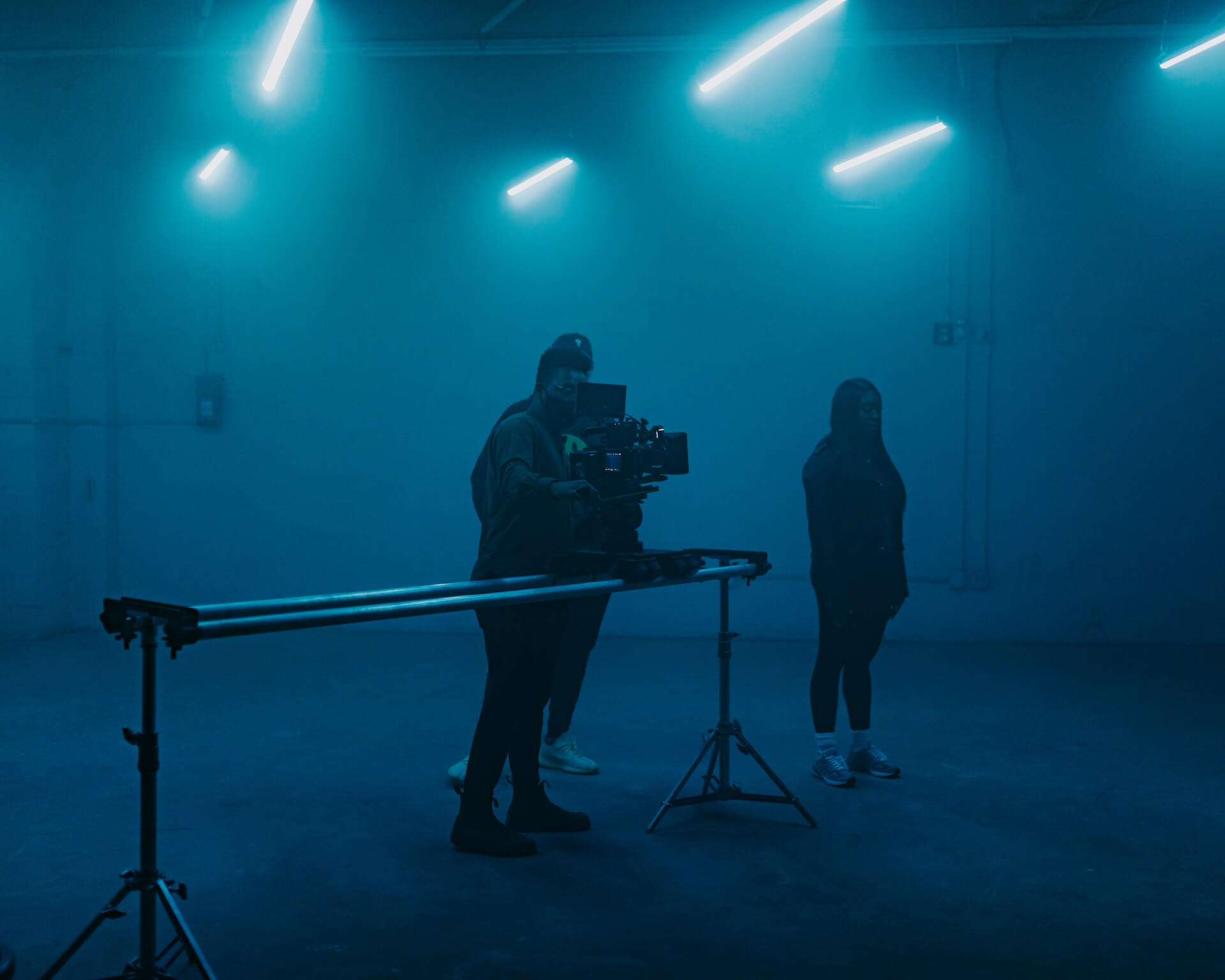
The most significant of camera movements is the dolly shot. This shot is when you mount the camera on a dolly track, which is a piece of grip equipment. You can move the camera along the track from side to side, front and back. The dolly track helps to create a smooth and controlled movement as you follow a subject.
You can use this effect for many reasons, such as revealing a location, changing the viewer’s attention, or showing a character’s emotional state. The dolly shot is another way of creating psychological effects, such as paranoia or mental illness. You can combine this shot with zoom or any other camera movement.
The dolly shot moves the whole camera throughout a film location. You can find it in all film genres, with popular use in dramas and action. The dolly zoom, using the zoom movement whilst on a dolly, creates a disorientating, vertigo effect, which shows a character’s poor mental state.
5 Push
The push shot is when the camera moves closer or away from a subject, also known as push in and pull out. You can create this shot on a dolly track or with a Steadicam. The push-in draws the audience towards a subject or scene detail. In contrast, the pull-out moves away from the action.
These camera movements allow you to move into or out of a film location. For example, the push-in brings you closer to the action, while the pull-out can reveal more of a scene or location. These movements change the audience’s perspective either as a reaction to a scene or to reveal a character’s internal conflict.
The push and pull shots make the audience aware of the camera. They are distinctive and distracting shots that can break the fourth wall. Because they are distracting, it’s typical for filmmakers to plan shots like these in advance with storyboards before filming.

Book Locations for Photo Shoots and Filming
Find the perfect location for your next photo or video shoot. Get in touch with our hosts directly or book a shoot location in minutes.
6 Arch
One of the more interesting camera movements is the arch shot. In this shot, you move the camera around a subject 360 degrees. The subject is typically still while the camera circles around them in a complete circumference. You achieve this either by creating a round dolly track or by using a Steadicam.
The technique centres the audience’s focus or reveals a full 360 of a location. It can also show a character’s emotional state by creating a dizzy and confusing effect. For example, if a character is scared and confused, the arch shot shows their internal conflict.
You can use this distinctive 360-degree arch shot within any genre film, but it is most noticeable in horror and action scenes. To achieve this shot, you must make the whole location accessible and have your crew hide from the shot.
7 Roll
The camera roll is another film movement that relies on a rotation. To achieve this shot, you fully roll the camera onto its side and along the axis. The camera rolls 360 degrees around the axis, creating a dizzy, unnatural effect. It is an intentional camera movement makes the audience feel dizzy.
Most often, you use a camera tripod to create this shot. However, you can use hand-held, and previously, filmmakers have created the effect by tying a rope around the camera. It’s a bigger disruption to the cinema illusion than with a push-in or panning shot.
The roll shot is a great way to change the mood within a scene. You can use it in a dream sequence or to introduce a character. Just like the arch shot, it’s likely you will only use this effect once or twice within a film to create a jarring and disorientating effect.
8 Steadicam
The last of our camera movements is the Steadicam shot. The Steadicam is a camera stabilizer device that attaches to the operator’s body. The Steadicam allows the cameraman to move fully with the camera without the shake of a hand-held camera.
The technique lets the camera to move freely around a film location. So, the camera operator can now follow the actors in any direction, walking upstairs, around corners and on uneven terrain. The Steadicam shot removes the need for other expensive equipment like cranes and dolly tracks.
It’s a popular choice for filmmakers as it creates complete freedom around a location. Because of this, you can find it in all genres, in particular drama and thriller. You can also use the Steadicam as a point-of-view to show the perspective of someone watching.
Rent Cameras on Scouty
Rent cameras and other equipment for photo shoots and filming on Scouty. Get in touch with our top lenders and book equipment in minutes.
Header image: Photo by Daniel Lee on Unsplash